Attract client interest
Make complex utility AI understandable through public demonstrations, clear positioning and industry stories that account teams can share.
For 33 years I evolved with the grid. Now I'm building what comes next: the intelligence layer above it.
I bring 33+ years across utility operations, technology platforms, systems integration and consulting to the work of building a Power & Utilities business: shaping the offer, preparing the team and earning the client's confidence.
Today, as NVIDIA Solutions Director for Power & Utilities at SoftServe, I am building GridCORTEX to connect three parts of that work.
Make complex utility AI understandable through public demonstrations, clear positioning and industry stories that account teams can share.
Bring account research, opportunity prioritization and conversation preparation together so teams can approach the right utility with a relevant business case.
Connect operational needs to defined use cases, discovery and a practical path to implementation using SoftServe capabilities and NVIDIA technologies.
That approach builds on 22 years in a real-time utility control center, global SME leadership, implementation and upgrade work at 14 utilities, and consulting practice development.
Explore the three-part approach → See the experience behind itI started long before “smart grid” or “grid modernization” were terms. I know what's under the hood, because I ran the grid at every stage of the technology.
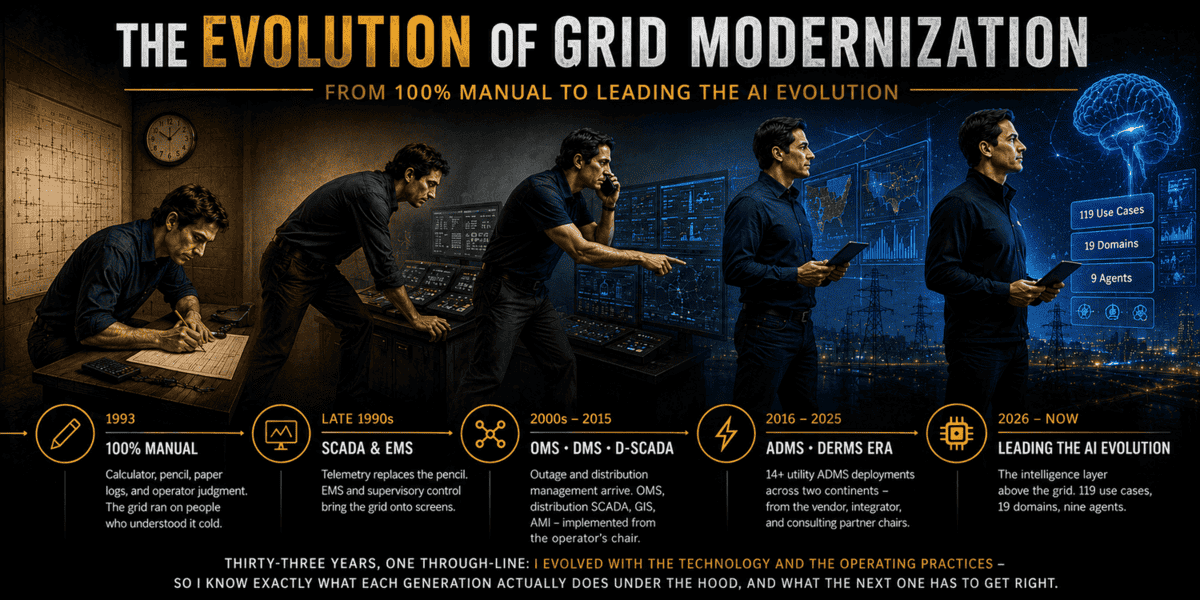
Thirty-three years, one through-line: I evolved with the technology and the operating practices, so I know exactly what each generation actually does under the hood, and what the next one has to get right.
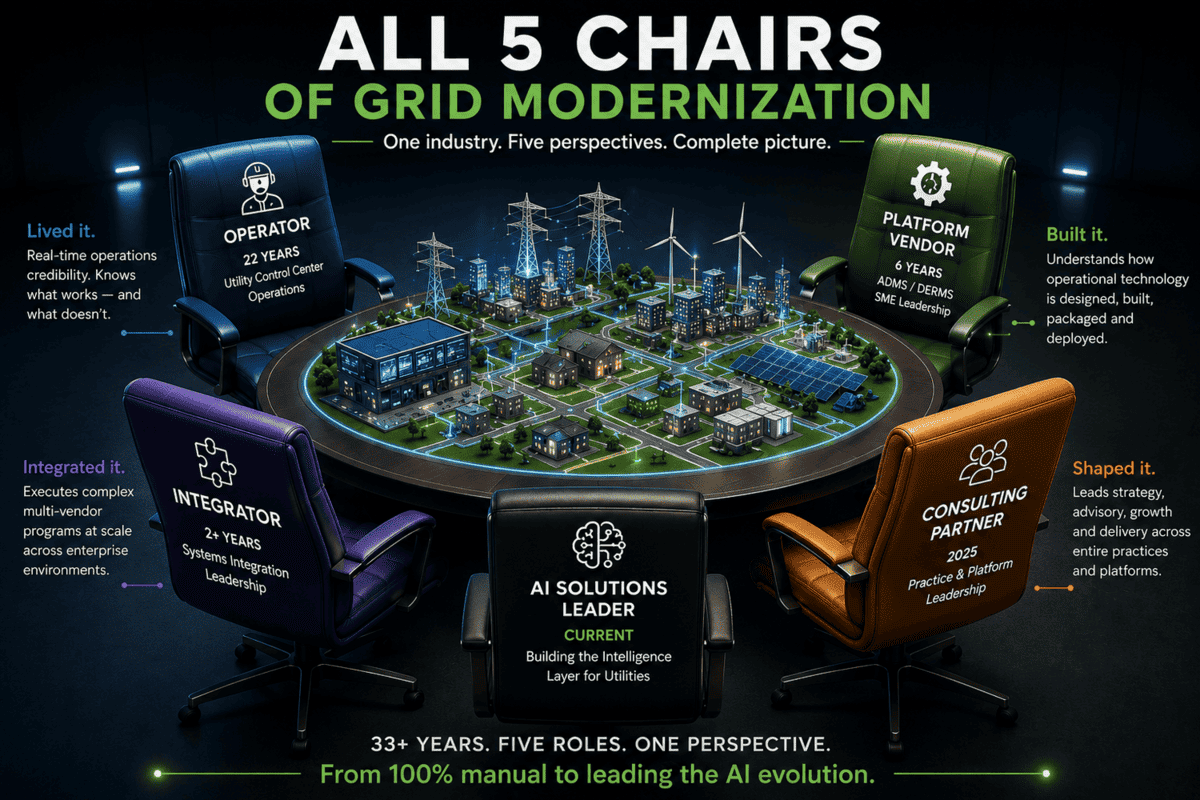
Utility operator. Platform vendor & developer. Systems integrator. Consulting partner. AI solutions leader.
Most people in this industry see grid modernization from one angle. After 33+ years of deliberate moves, 22 years operating a utility control center, 6 years leading SME work at a major ADMS and DERMS platform vendor, 2+ years directing systems integration practices, Partner at a global consulting firm, and now NVIDIA Solutions Director at SoftServe building GridCORTEX, I see it from all five. That perspective is what I bring to every conversation.
Each transition was a deliberate step toward a capability the previous role couldn't teach. Here's what each one captured.

Real-time T&D control center. NERC certified system operator, reliability credential. Built and ran the Blackstart restoration program from the ground up. Lived through every major operational technology evolution from manual SCADA to ADMS.
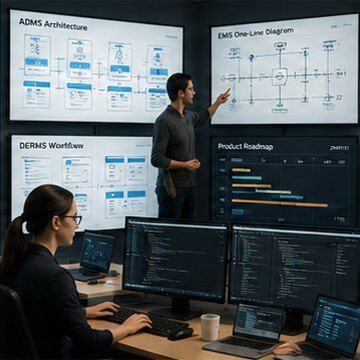

Lead Smart Grid SME. Set new sales records every year for six consecutive years. Led the SME team across 14+ utility ADMS deployments in North America and Australia. Fed operator-driven product enhancements directly into the engineering roadmap, including the ADMS and DERMS hybrid architecture at APS and the wildfire mitigation capability built into ADMS for PG&E. Pioneered the cloud-based virtual server environment that became the global default for ADMS demonstrations.
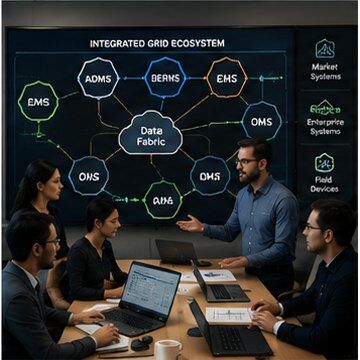


Director of a Smart Utilities Digital Grid practice, then Senior Principal of Grid Management Solutions consulting. Led major engagements across DER SCADA migration, OSI DERMS, GE OMS and DMS, ADMS upgrade strategy, AMI 2.0 integration, and operations change management.
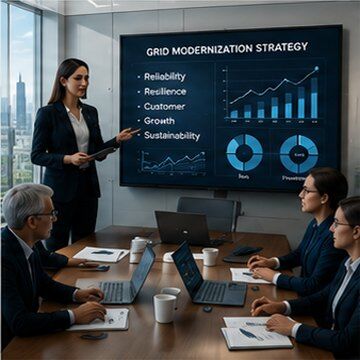

Partner-level practice and platform leadership. Architected three signature offerings: GridVISION (flagship overlay platform), Suite 16 (16-domain modernization framework), and MC-LLI (mission-critical large-load infrastructure market category). Led executive advisory with National Grid and Avangrid.
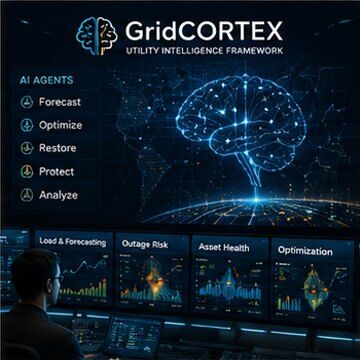
NVIDIA Solutions Director for Power & Utilities at SoftServe. Architecting GridCORTEX, the AI-powered utility intelligence ecosystem for electric utilities, built on NVIDIA's accelerated computing infrastructure. Eight modules, seven available today with GridEVENT in development, ten agents, 24 operating domains and 189 utility-specific use cases, and an ecosystem that extends into autonomous physical AI and robotics.

Rewriting integrated resource plans across North America. Every major IOU is rebuilding its load forecast around it.
Out of demos and into the control room, with all the operator-trust, audit, and human-in-the-loop questions that come with it.
Outpacing the operating models utilities currently have. The architecture problem is no longer optional.
NVIDIA Isaac ROS 2 and Jetson Orin have crossed the maturity threshold for utility infrastructure. Autonomous inspection, first-responder robotics, and edge AI are no longer research projects.
Half the utility workforce is retirement-eligible this decade. Forty years of operational knowledge walks out the door every Friday. The gap layer is the only place it can be captured.
I've spent 33+ years preparing for a moment exactly like this one. The full operator + vendor & developer + integrator + consultant + AI solutions perspective is what this moment needs.
Take a real operational problem, translate it into architecture, then build how the solution gets sold and delivered. I have done that at SoftServe, at Wipro and at Schneider Electric, and each one is written up in full with my role and attribution on it.
Across every major operational platform on the market, ADMS, DERMS, OMS, DMS, SCADA, EMS, GIS, AMI, and the major vendors that build them.
It's linked from my email signature so colleagues, partners, and clients can see the full picture beyond LinkedIn. The most reliable way to start a conversation is LinkedIn.